


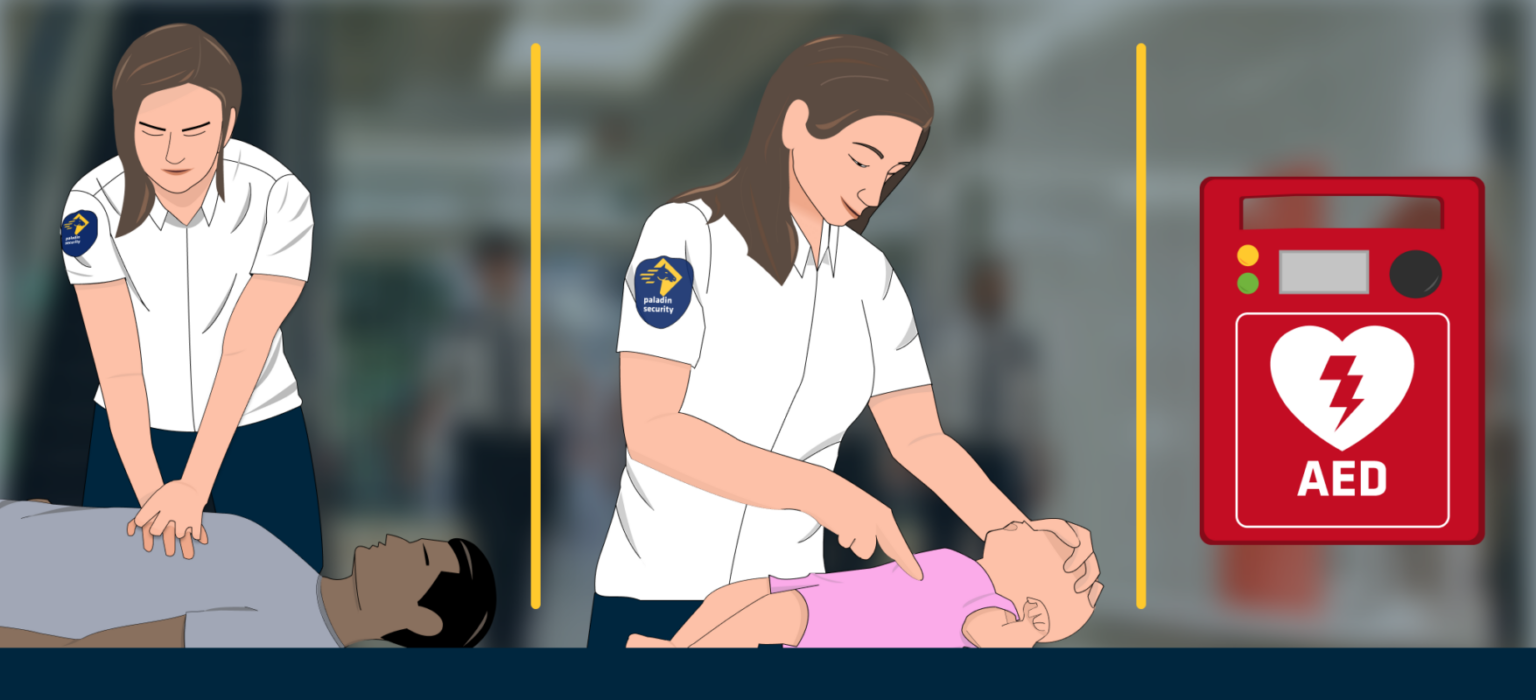
“If you don’t use it, you’ll lose it”.
-Jason Magallanes, National Training and Development Manager
When it comes to first aid, keeping up on your skills and new information is crucial. If you aren’t performing CPR daily or assisting someone who’s having a stroke (which most of us aren’t), the training can quickly and easily be forgotten. But that means when it is time to step in during an emergency, what will you remember?
We want to help keep first aid and lifesaving skills at the top of your mind, so we have created an eight-part mini-series that will appear once a month to do just that. Our first few topics were emergency scene management, severe bleeding, and broken bones. This month’s topic is CPR.
What is CPR
Cardiopulmonary resuscitation, or CPR, is an emergency lifesaving procedure done when the heart stops beating. Performing CPR can double, or even triple the chances of survival. It can be done on infants, children, and adults. In this month’s refresher, we’ll explain when to use it and how to give it. We’ll also provide the steps on how to use an AED.
When to use CPR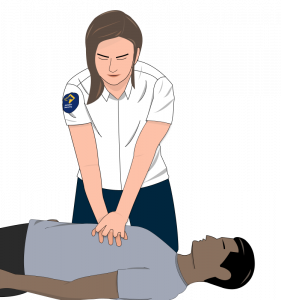
The first thing you should do after assessing the scene is check for breathing and a pulse. If they aren’t breathing or have a pulse, then get prepared to start CPR. Without oxygen, the brain starts to shut down within minutes. The quicker you begin compressions, the better chance the person has of surviving.
“Most certified first aiders are familiar with the term “the golden hour”, which means if the casualty received medical assistance within or under one hour, there is a higher chance of full recovery,” Magallanes said.
Here are a few reasons CPR may be needed:
- Heart attack, angina, or stroke
- Choking
- Smoke or fire inhalation
- Electrical injuries
If someone is having a heart attack, their symptoms could be as follows:
- Pain radiating to the arms or jaw
- Often described as indigestion
- Pale skin
- Nausea and fatigue
- Shortness of breath
While a heart attack could lead to a person becoming unconscious and their heart-stopping, it’s important to remember CPR should only be given to someone who is unconscious and not breathing.
How to give CPR to an adult
There is a chain of survival that includes recognition, CPR, AED, advanced life support, and medical care. If you come across someone who may be in need of CPR, prepare for the following:
- Call 911 or ask someone else to. Get someone to find an AED.
- Lay the person on their back and open their airway.
- Check for breathing. If they aren’t, start CPR.
- Place both hands (stacked with laced fingers) on the center of the person’s chest.
- Perform 30 compressions 5-6 cm deep.
- Do 100-120 compressions/minute.
- Provide two ventilation or rescue breaths.
- Repeat until an ambulance arrives or you can use an AED.
How to give CPR to a child or infant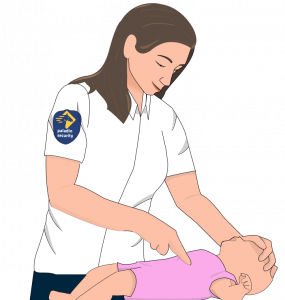
When performing CPR on a child or infant, the only differences from above is what part of your hand you use for compressions and how hard to push.
- Call 911 or ask someone else to. Get someone to find an AED.
- Lay the person on their back and open their airway.
- Check for breathing. If they aren’t start CPR.
- For children, place both hands (stacked with laced fingers) on the center of their chest.
- Perform 30 compressions 5 cm deep.
- For infants, use two fingers to deliver 30 quick compressions that are about 4 cm deep.
- Do 100-120 compressions/minute.
- Provide two ventilation or rescue breaths.
- Repeat until an ambulance arrives or you can use an AED.
Infants are less than one year old and could be in need of CPR due to one of the following factors:
- Choking/suffocation
- Drowning
- Allergic reaction/asthma
- Injury or swelling
Remember, once you start CPR, don’t stop until one of the three conditions occur:
- Casualty wakes up and responds.
- Another first aider/medical help arrives and can take over.
- You cannot physically continue, and it is a detriment to your safety.
How to use an AED
An AED, or Automated external defibrillation, can be a huge asset to a first aider and provide a high chance of survival. They are usually found in public spaces, such as gyms or pools, offices, or schools. They are easy to use as long as you follow the verbal prompts from the unit.
- Open or turn on the AED
- Follow the voice prompts
- Remove any clothing or jewelry from the chest area
- Dry or shave the chest as needed
- Apply the pads as indicated
- The AED will analyze
- Press “Shock” if prompted
- Continue CPR if prompted
Chance of survival
The chances of bringing an unconscious casualty back from resuscitation depend on many factors:
- How did they become unconscious?
- Was it an external factor like blunt force trauma, electrocution, suffocation, or substance overdose?
- Does the casualty already have an underlying health condition, like heart disease, a pacemaker, or already had several heart attacks before?
What’s important is that we help if we can and do the best we can with the skills we have been trained with. Can we be unsuccessful? Yes, there is that chance that our efforts won’t help, but trying instead of not responding gives the casualty a higher chance of survival.